
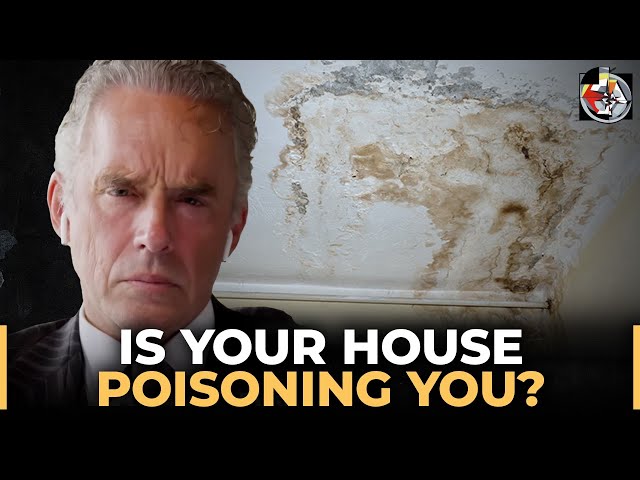
The renowned Canadian psychologist Jordan Peterson’s recent health crisis has brought unprecedented public attention to the often-overlooked dangers of indoor mold exposure.
In August 2025, Peterson’s daughter Mikhaila announced that he had been diagnosed with Chronic Inflammatory Response Syndrome (CIRS) following exposure to a particularly moldy environment while cleaning out his grandfather’s house after his death.
Mikhaila Peterson stated, “Recently, he was exposed to a particularly moldy environment while helping clean out my grandfather’s house after he passed away, which severely flared symptoms”.
Mikhaila Peterson disclosed the diagnosis in a post on X (formerly Twitter) that Peterson himself retweeted: “Hey guys, @jordanbpeterson is taking some time off of everything. He was diagnosed with CIRS (chronic inflammatory response syndrome) due to a genetic predisposition that causes the immune system to have an inability to recognize and detox mold/bacteria in indoor air”.
“CIRS is what has been behind his various health concerns, including severe allergies and significant food sensitivities over the years,” Mikhaila Peterson wrote. She further noted that a strict carnivore diet had served as a partial workaround for years, dampening systemic inflammation by eliminating dietary triggers that burdened an already overwhelmed immune system.
But a meat-only diet, however effective as a coping mechanism, is not a cure for biotoxin-driven immune dysfunction.
When Peterson re-entered a heavily contaminated environment during the house cleanup, his already-compromised immune system could not absorb the additional biotoxin load. “It hasn’t been enough recently,” Mikhaila confirmed.
This trajectory — years of unexplained multi-system symptoms managed through dietary restriction, followed by a catastrophic flare after environmental re-exposure — is a pattern that environmental medicine practitioners recognize immediately.
It is also a pattern that mainstream medicine has historically dismissed or misdiagnosed as anxiety, autoimmune disease, somatization, or psychosomatic illness.
The announcement was brief, but its implications were enormous — both for Peterson’s millions of followers and for the broader public conversation about indoor air quality.
Exposure to water-damaged buildings is the most common environmental trigger for CIRS, accounting for roughly 80 percent of all biotoxin-related illness cases, according to functional medicine practitioners who follow the Shoemaker Protocol.
For most people, walking through a moldy basement produces a stuffy nose and watery eyes at worst. For the roughly 25 percent of the population carrying specific genetic variants in their Human Leukocyte Antigen (HLA) genes, however, even brief exposure can ignite a systemic immune response that the body cannot shut down on its own.
Peterson, as his daughter explained, belongs to that genetically vulnerable quarter of humanity.
Peterson’s August 2025 CIRS diagnosis was alarming enough on its own. What followed was far worse.
By late summer 2025, Peterson had developed pneumonia and sepsis — conditions that sent him to the intensive care unit, where he remained for nearly a month. Mikhaila Peterson described the experience as a “near-death” ordeal in an emotional public update.
She reported that her father had been enduring “unexplained neuropathy and weakness, among other issues, for several years,” and that a cascade of neurological symptoms intensified in the aftermath of the mold exposure.
Mycotoxins — the volatile organic compounds and secondary metabolites produced by mold species such as Stachybotrys chartarum (black mold), Aspergillus, and Penicillium — are capable of crossing the blood-brain barrier and triggering neuroinflammation in susceptible individuals. In severe cases, the systemic inflammatory response triggered by mycotoxin exposure can mimic sepsis, characterized by organ stress, dysregulated cytokine signaling, and circulatory compromise.
Peterson’s clinical trajectory — CIRS flare, neurological deterioration, pneumonia, sepsis, ICU admission — represents one of the more severe documented outcomes of biotoxin illness in a high-profile individual.
By October 2025, Peterson had been transferred out of the ICU to a less critical floor — a milestone that Mikhaila publicly described with visible relief. He remained hospitalized for months afterward.
In December 2025, by the grace of God, Peterson was finally discharged, though his recovery was described as slow and ongoing.
His daughter released a Youtube video stating that his medical symptome were brought by decades of mold exposure.
Understanding CIRS: The Science Behind the Diagnosis
What makes Peterson’s story especially instructive for mold professionals and health advocates alike is that CIRS had been quietly shaping his health for years before anyone called it by name. Mikhaila Peterson stated that her father had been suffering from CIRS symptoms since at least 2017, a full year before he received a formal diagnosis in 2018.
For nearly a decade, Peterson managed a constellation of debilitating symptoms — severe allergies, food sensitivities so extreme that he was reduced to eating only red meat, unexplained fatigue, and neurological disturbances — without a unifying explanation.
To understand what happened to Peterson, one must understand what CIRS actually is — and why it remains one of the most contested diagnoses in medicine.
The term Chronic Inflammatory Response Syndrome was coined in the 1990s by Dr. Ritchie Shoemaker, a Maryland physician who identified a subset of patients presenting with multi-system, multi-symptom illnesses following exposure to water-damaged buildings.
Shoemaker developed a comprehensive diagnostic and treatment framework — now known as the Shoemaker Protocol — that has been adopted by hundreds of practitioners in integrative and functional medicine.
At its core, CIRS represents a failure of innate immune regulation.
In genetically susceptible individuals, biotoxins from mold, bacteria, and other environmental sources cannot be effectively tagged and cleared by the immune system. Instead of mounting a targeted response and returning to baseline, the immune system remains in a state of persistent, low-grade activation that progressively damages multiple organ systems.
Symptoms include fatigue, cognitive impairment (frequently described as “brain fog”), joint and muscle pain, light sensitivity, mood dysregulation, respiratory problems, and gastrointestinal disturbances — a symptom profile so diffuse that it evades conventional diagnostic categories.
Approximately 25 percent of the general population carries HLA-DR gene variants associated with CIRS susceptibility. Among those individuals, exposure to water-damaged buildings — which the EPA estimates affect approximately 50 percent of all structures in the United States — creates the biological conditions for CIRS to develop.
The biotoxins involved are not merely allergenic; they are immunologically disruptive at concentrations far below levels that would cause visible toxicity in non-susceptible individuals.
A 2024 review published in the Annals of Medicine and Surgery documented statistically significant improvements in CIRS patients treated with the Shoemaker Protocol, including measurable changes in biomarkers including transforming growth factor beta-1 (TGF-β1), C4a complement levels, and visual contrast sensitivity (VCS) test scores.
However, the broader medical establishment — including the CDC, WHO, and major medical colleges — does not currently recognize CIRS as a formal diagnosis, arguing that the evidence base is insufficiently independent and that mycotoxin concentrations in typical water-damaged buildings are too low to produce systemic toxic effects in the manner described.
In January 2024, Jordan Peterson interviewed Dr. Ritchie Shoemaker and Dr. Scott McMahon discussing the toxic mold in relation to CIRS with chronic fatigue syndrome and depression.
The Medical Establishment’s Blind Spot
The controversy surrounding CIRS is not merely academic. It has direct, life-altering consequences for patients who present with the constellation of symptoms the condition produces.
Peterson’s own family experienced this firsthand.
Mikhaila Peterson expressed open frustration with the medical mainstream in her public posts, stating: “It’s astonishing that doctors generally fail to acknowledge that mold exposure in indoor environments is causing chronic health problems”.
She drew a pointed analogy to the early history of ketogenic diets in psychiatry — a treatment once dismissed by mainstream medicine that is now gaining clinical acceptance for conditions including epilepsy and treatment-resistant depression.
This tension — between patients experiencing measurable impairment and an institutional framework that lacks tools to explain it — is precisely the environment in which Peterson’s health deteriorated over nearly a decade without a coherent diagnosis.
Conclusion
Jordan Peterson’s battle with toxic mold is not simply a celebrity health story.
This case highlights a common scenario in mold-related illness: individuals undertaking renovation, cleaning, or restoration work in water-damaged buildings without adequate protective measures.
When disturbing mold-contaminated materials, spores and mycotoxins can become aerosolized, leading to acute exposure that overwhelms the body’s detoxification capabilities, particularly in genetically susceptible individuals.
It is a case study in the real-world cost of underdiagnosing environmental illness, the devastating potential of CIRS in genetically susceptible individuals, and the urgent need for greater integration between indoor air quality science and clinical medicine.
Peterson spent years managing the downstream effects of a condition he did not yet have a name for, paid for it with his health and nearly his life, and now faces a recovery whose timeline remains uncertain.
The lesson for every homeowner, building occupant, mold professional, and healthcare provider is the same: indoor air quality is not a cosmetic issue.
For a significant portion of the population, the air inside a water-damaged building is not merely unpleasant — it is toxic.
Mold does not discriminate by intellect, accomplishment, or public stature. It only requires the right genetic key and sufficient exposure time to turn a human immune system against itself.
Identifying mold early, remediating it completely with the right protective gear, and supporting the recovery of those already affected are not fringe concerns.
They are matters of life and death — as Jordan Peterson’s health crisis made unmistakably clear.
References
-
Newsweek. “Jordan Peterson Diagnosed With Chronic Condition After Mold Exposure.” August 14, 2025. https://www.newsweek.com/jordan-peterson-chronic-condition-mikhaila-peterson-2113371
-
The Independent. “Jordan Peterson ‘Taking Time Off Everything’ After Being Exposed to a Moldy Environment.” August 14, 2025. https://www.the-independent.com/news/world/americas/jordan-peterson-health-mold-mikhaila-cirs-b2807473.html
-
New York Post. “Jordan Peterson Was ‘Near Death’ Due to Pneumonia, Sepsis: Daughter.” October 5, 2025. https://nypost.com/2025/10/05/us-news/jordan-peterson-was-near-death-due-to-pneumonia-sepsis-daughter/
-
Tuko. “Jordan Peterson’s Health Update: Chronic Condition, Hospitalisation, and Recovery.” January 13, 2026. https://www.tuko.co.ke/facts-lifehacks/celebrity-biographies/614512-jordan-petersons-health-update-chronic-condition-hospitalisation
-
Air Oasis. “CIRS Gains Public Attention as Jordan Peterson Takes Medical Leave for Mold-Related Illness.” August 17, 2025. https://www.airoasis.com/blogs/articles/cirs-gains-public-attention-as-jordan-peterson-takes-medical-leave-for-mold-related-illness
-
Richmond Functional Medicine. “CIRS Treatment Protocol (Chronic Inflammatory Response Syndrome).” February 20, 2019. https://richmondfunctionalmedicine.com/mold-related-biotoxin-illness-part4/
-
IRIS Laboratories. “Jordan Peterson, CIRS, and Mold: How Air Quality Affects Health.” August 28, 2025. https://irislaboratories.com/jordan-peterson-cirs-and-mold-could-indoor-air-be-the-missing-piece/
-
Annals of Medicine and Surgery / PubMed Central. “Chronic Inflammatory Response Syndrome: A Review of the Evidence.” November 7, 2024. https://pmc.ncbi.nlm.nih.gov/articles/PMC11623837/
-
Uplift Concierge Health. “A Comprehensive Guide to Managing Mold Toxicity and CIRS.” February 16, 2024. https://www.upliftconcierge.com/post/shoemaker-protocol-mold-toxicity-cirs
-
Surviving Mold / Dr. Ritchie Shoemaker. “Steps of the Shoemaker Protocol for Treating Chronic Inflammatory Response Syndrome.” https://www.survivingmold.com/docs/12_STEP_SHOEMAKER_PROTOCOL_FOR_CIRS.PDF
0 Comments