
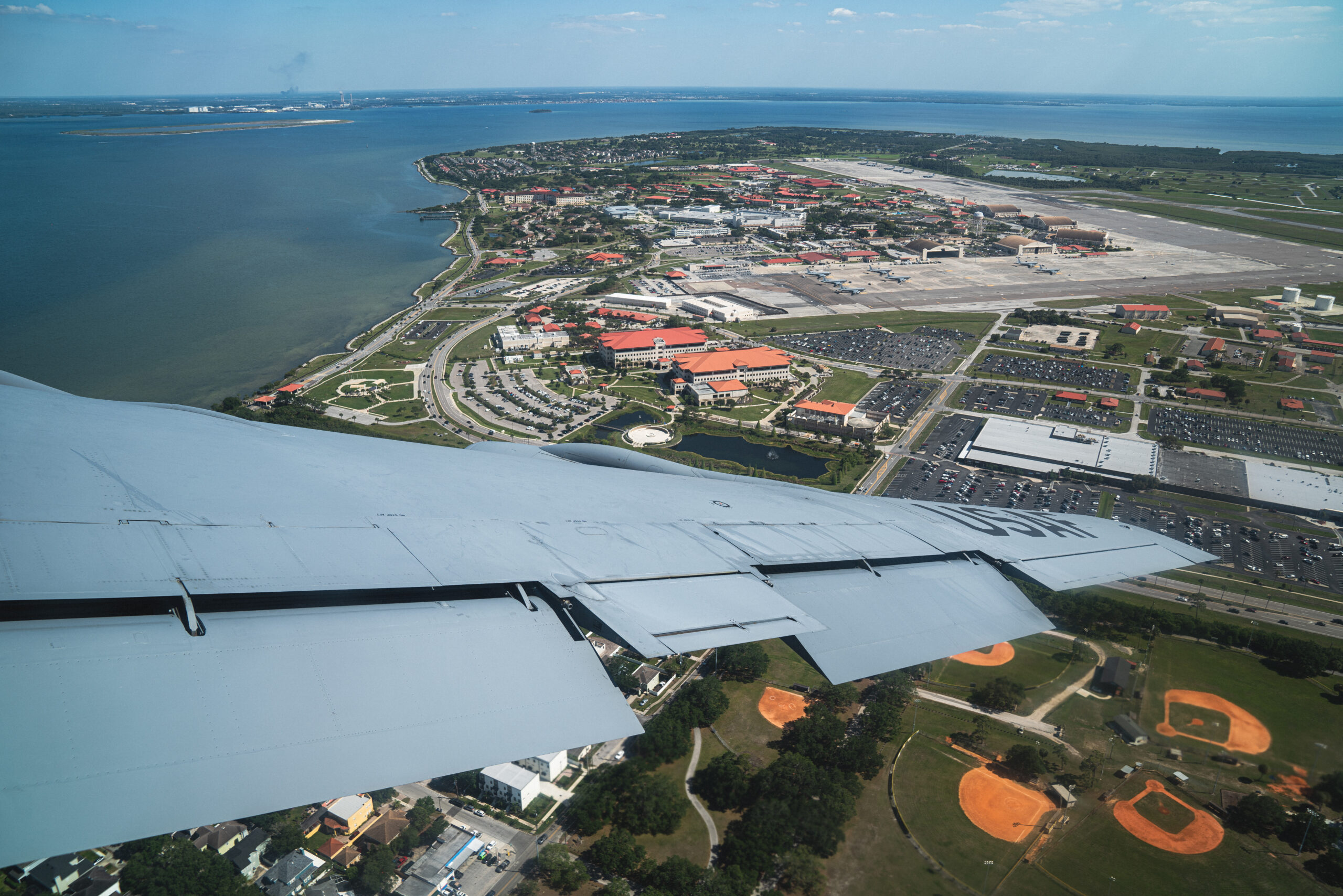
Military families living at MacDill Air Force Base in Tampa say toxic mold and unsafe housing conditions have made them sick for years—and they are now pushing back through lawsuits and congressional pressure.
MacDill Air Force Base is home to U.S. Central Command and more than 4,000 military families living in the base’s Harbor Bay housing community, which is managed by a private company, The Michaels Organization, under a Department of Defense public‑private housing program.
Since the 2010s, service members have reported persistent mold, water leaks, and peeling walls, with some units even showing mushrooms growing from floors and carpets
Independent mold inspections have found very high levels of mold, including Stachybotrys (“black mold”), inside air‑handling units, prompting some inspectors to label homes unfit for human occupancy.
Some MacDill families report chronic fatigue, headaches, and mood problems they tie to time spent in moldy units, and at least one plaintiff has described blood‑pressure spikes requiring emergency care.
Repeated exposure to mold in water‑damaged homes can trigger allergic reactions, asthma flare‑ups, and other respiratory symptoms, especially in children and people with pre‑existing conditions.
For a base that hosts senior command elements, including U.S. Central Command staff, the health and performance of military families and support personnel are directly tied to the base’s ability to maintain readiness.
Chronic illness, sleep disruption, and stress from unsafe housing can degrade focus, morale, and overall mission effectiveness, even if the base infrastructure appears “operational” on paper.
The MacDill situation is not isolated. Nationwide audits and data from 2024–2025 show thousands of mold‑related complaints in privatized military housing, indicating that the same basic problems—water intrusion, poor maintenance, and inadequate disclosure—recur across multiple bases.
Chronic illness and stress from unsafe housing can erode morale and performance, even if the base as a whole appears to be running smoothly.
Lawsuits and political pressure
In 2025, more than 170 service members and family members filed a 200+ page federal lawsuit against The Michaels Organization, alleging fraud, unsafe conditions, and failure to disclose past mold and water‑damage events.
The complaint alleges not only hazardous mold growth, but also that the company misrepresented housing histories, failed to disclose past mold and water‑damage events, and offered only cosmetic fixes that did not address underlying moisture problems.
The complaint says families were sometimes forced to abandon most of their belongings because of contamination and that maintenance responses were slow or cosmetic rather than fixing the underlying moisture.
One lawsuit alleges that at least one service member suffered blood‑pressure spikes and emergency‑room visits while living in a mold‑infested unit, raising concerns about whether chronic exposure to damp, moldy environments can affect cardiovascular and neurological health over time.
Florida lawmakers, including U.S. Representative Kathy Castor, have publicly condemned the housing conditions and called for the contractor to be held accountable. Castor has described the company’s performance as worse than most across the country and has urged stronger oversight of privatized military housing contracts.
In early 2026, the U.S. Air Force placed The Michaels Organization on a formal Performance Improvement Plan (PIP) for MacDill’s housing operations. The PIP outlines specific action items, milestones, and timelines for improving maintenance quality, oversight, and most critically, moisture mitigation inside homes.
They have also directed MacDill leadership to ensure that families are informed about mold testing results and about whether their homes are fit for occupancy, a change that addresses long‑standing complaints that families were sometimes left in the dark about the true condition of their units. There is no fixed end date for the PIP; it depends on the contractor fully meeting all benchmarks.
Why the mold keeps coming back
From a building‑science perspective, the mold problems at MacDill mirror a classic pattern: persistent moisture plus poor ventilation equals perfect conditions for mold growth.
Reported issues include:
-
Leaking roofs, windows, and laundry rooms that dampen walls, ceilings, and the floor system.
-
Inadequate vapor control and drainage, allowing moisture to rise from the ground into living spaces.
Even when mold is cleaned from visible surfaces, the root problem is often the underlying moisture. If leaks are not repaired, drainage is not corrected, and humidity is not controlled, new mold can grow within days.
That’s why many families say they saw mold return after a “cleaning” or superficial patch job.
How this fits into national military‑housing problems
A 2025 audit of military housing across the country found thousands of mold‑related complaints, showing that MacDill’s problems are not unique. The MacDill lawsuits and PIP have become case studies for how privatized housing contracts can leave families vulnerable when maintenance and disclosure systems fail.
Advocates and lawmakers are now pushing for changes such as:
-
Clearer disclosure of seven‑year maintenance and mold histories before service members sign leases.
-
Routine indoor‑air and moisture testing in older, humid‑climate housing such as MacDill’s.
The mold crisis at MacDill Air Force Base is a sobering example of how water‑damaged buildings can silently undermine health, trust, and mission readiness—even on a high‑profile military installation.
Families have been pushed to the legal and political frontlines, forcing more transparency and accountability in how military housing is managed.
For families living in or moving into military or civilian housing, the main lesson from MacDill is to treat mold as a moisture problem, not a cleaning problem. Simple steps include:
-
Immediately repairing leaks, checking for condensation, and using dehumidifiers in humid climates. [cdc_molds]
-
Inspecting HVAC systems and asking for independent mold or air‑quality testing if anyone has ongoing respiratory or allergy symptoms.
For landlords and property managers, the takeaway is that mold cannot be managed with spot repairs alone.
Proper drainage, vapor barriers, correctly sized HVAC systems, and timely maintenance are required to prevent recurring mold, especially in hot, humid regions like Tampa.
References:
-
Stripes, “Troops sue MacDill AFB housing company for unsafe, moldy housing and fraud” – https://www.stripes.com/branches/air_force/2025-09-29/macdill-housing-company-mold-fraud-lawsuit-19264760.html
-
Tampa Bay 28, “MacDill housing contractor on performance improvement plan amid mold concerns” – https://www.tampabay28.com
-
Military.com, “Audit Finds Fresh Risks in Military Base Housing” – https://www.military.com/feature/2025/11/25/audit-finds-fresh-risks-military-base-housing.html
-
ClassAction.org, “Military Housing Mold Lawsuits” – https://www.classaction.org/us-military-base-mold-complaints-lawsuit
-
U.S. CDC, “Molds in the Environment” – https://www.cdc.gov/mold [cdc_molds]
-
U.S. EPA, “Mold and Moisture” – https://www.epa.gov/mold [epa_mold]
What readers should take away
The mold crisis at MacDill Air Force Base is a sobering example of how water‑damaged buildings can silently undermine health, trust, and mission readiness—even on a high‑profile military installation. Families have been pushed to the legal and political frontlines, forcing more transparency and accountability in how military housing is managed.
For both homeowners and military families elsewhere, the message is clear: mold is rarely an isolated event. It is a symptom of ongoing moisture problems that must be corrected at the building level, not just wiped away. [cdc_molds] By demanding better inspections, full disclosure, and long‑term moisture control, residents can help prevent the kind of multi‑year mold crises that have unfolded at MacDill and other bases.


0 Comments