
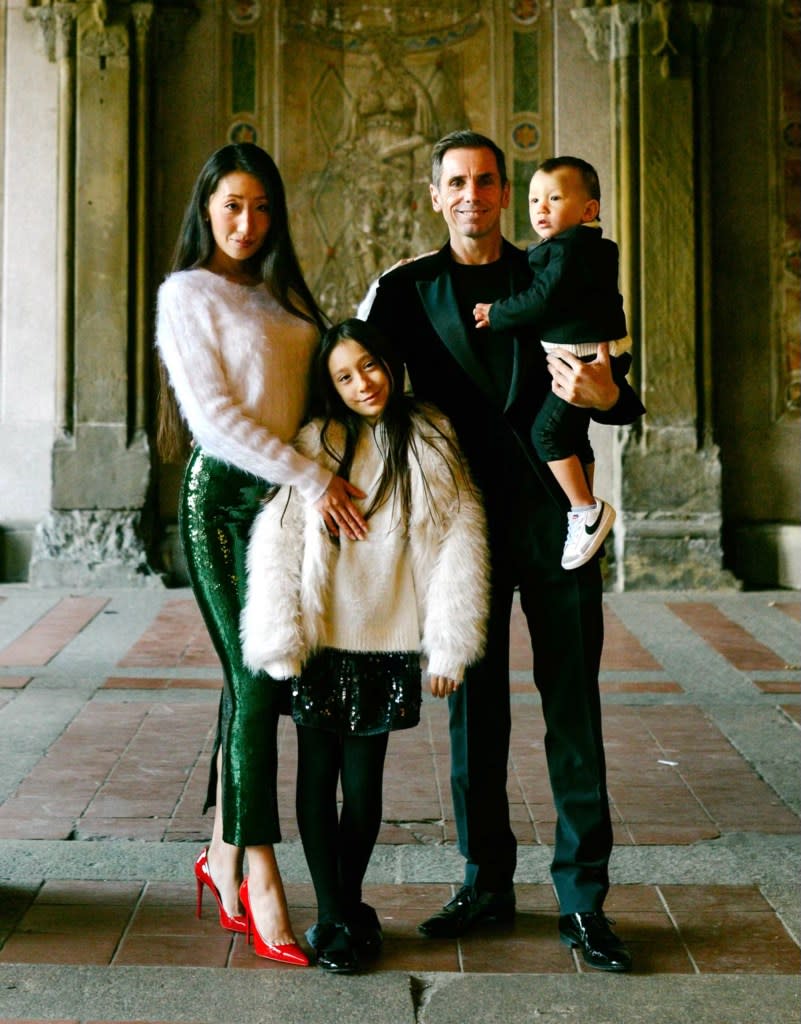
When Jae Donnelly moved his family into a sleek Upper West Side apartment in one of Manhattan’s most upscale buildings, he expected comfort, safety, and the kind of high-end living that comes with $5,000-a-month rent.
What he got instead was hidden mold, a sick infant covered in painful sores, and a fight with management that ultimately cost his family their health — and their life in America.
Jae Donnelly, a British-born photographer whose work has appeared in the New York Post, lived with his Juilliard-trained cellist wife and their two young children — a 10-year-old daughter and a 2-year-old son — at the Sessanta high-rise at 229 West 60th Street on the Upper West Side.
The 27-story luxury building, constructed in 2007, offers walnut flooring, maple cabinetry, and Italian porcelain bathroom tiles, with studios starting at nearly $3,895 per month and larger units well above $5,000.
In January 2024, a maintenance worker arrived to fix a leak in the apartment.
Workers cut away a section of wall and replaced flooring, but failed to conduct a proper mold assessment, despite Donnelly’s repeated concerns.
That failure would prove devastating.
“I have never encountered individuals who displayed such complete indifference to my family’s well-being; it was shocking and truly distressing,” Donnelly told the New York Post.
“My children were just expected to endure this situation. It was devastating.”
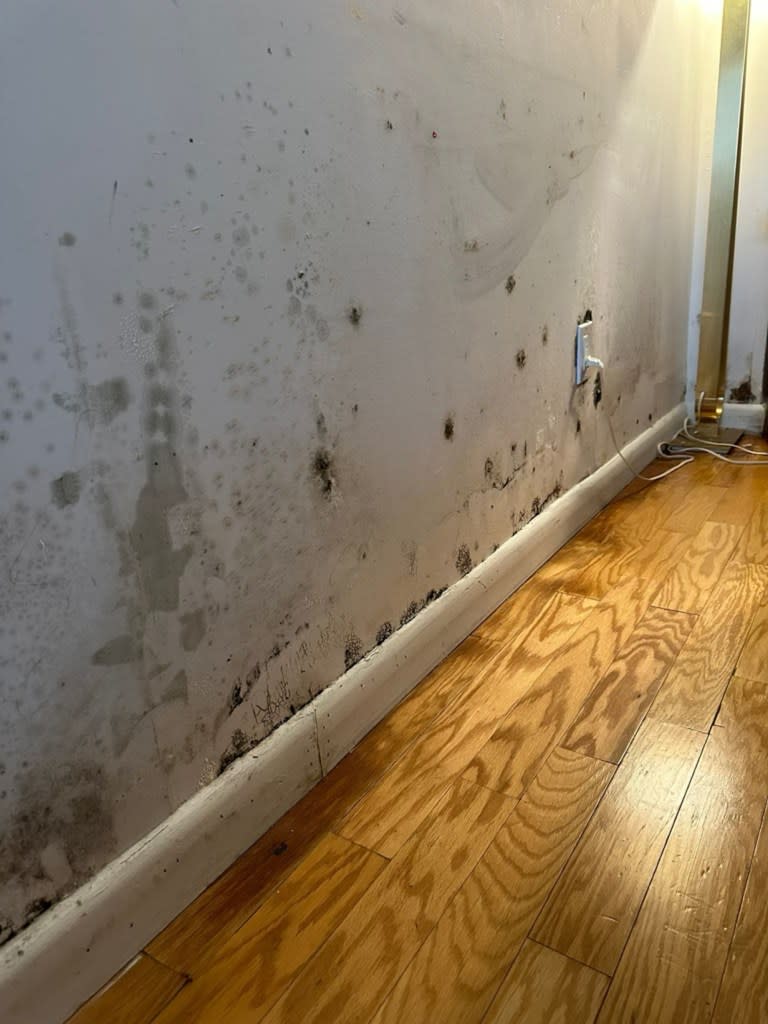
When workers returned 11 months later to address a second leak, they moved the family’s couch — and found mold growing on the wall and across the back of the sofa.
The discovery was alarming. Mold had infiltrated the walls, floors, and kitchen, including the cabinets where the family stored their cooking utensils.
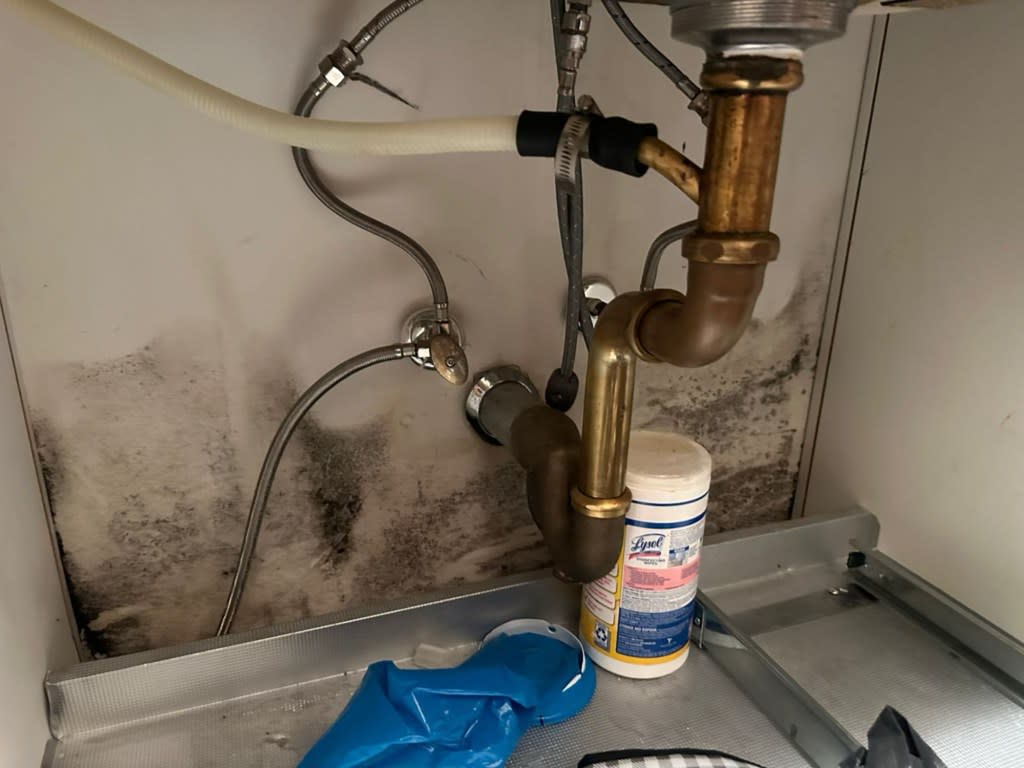
What happened next made a bad situation far worse. Workers removed large sections of sheetrock but took no precautions to prevent mold spores and construction dust from spreading.
They brought in a fan to dry the area, which blew sheetrock dust and insulation fibers throughout the apartment.
“This occurred while my wife was breastfeeding,” Donnelly said.
“They brought in a fan to dry it out, which just blew sheetrock dust and insulation fibers all over the apartment — even onto my son’s milk sterilization equipment”.
Donnelly refused to accept management’s declaration that the mold issue was resolved. He hired his own inspector and conducted independent testing, which revealed alarmingly high levels of dangerous mold spores.
Blood tests performed on Donnelly, his wife, and their eldest daughter confirmed what many mold-illness experts already suspected: the family had been absorbing mycotoxins for an extended period.
Their results showed elevated levels of mycotoxins, including the highly toxic satratoxin — a compound produced by Stachybotrys chartarum, commonly known as black mold.
Their doctor concluded that their 2-year-old son, who was too young to be blood-tested, had very likely also been affected, since mycotoxins can be transmitted through breast milk.
In May 2025, Jae Donnelly and his family relocated to the United Kingdom, abandoning the city he had called home for 20 years. Their story is a stark reminder that mold illness does not respect income level, zip code, or the quality of a building’s finishes.
“Life was wonderful before this incident,” Donnelly reflected. “The sun was shining, and we never anticipated the storm”.
The Donnelly family filed a lawsuit in Manhattan Supreme Court against Align Management, the company responsible for managing the Sessanta building.
The lawsuit alleges that management:
- Failed to adequately fix the initial January 2024 leak when it was first reported
- Ignored Donnelly’s repeated pleas to conduct a proper mold assessment
- Allowed the mold to spread unchecked through the apartment for nearly a year
- Carried out improper remediation that actively worsened air quality by spreading mold spores and sheetrock dust
- Displayed negligence and recklessness that caused severe personal injuries from prolonged mold exposure
“Sadly, for Jae and his family, they are enduring the consequences of their landlord’s failure to adequately resolve the building leak when first alerted in January 2024,” stated their attorney, Eric Malinowski.
“The recurrence of the leak and subsequent mold growth eleven months later serves as evidence that the building and management company did not properly address the issue.”
The management of Sessanta did not respond to requests for comment.
References
-
West Side Rag — Toxic Mold Said to Sicken Family in UWS Luxury Building
-
SanAir Technologies — Largest Settlements from Toxic Mold Cases in the US
-
NJ Cooperator News — Cooperative Ordered to Purchase Apartment: Mold Verdict Issued in New Jersey
-
U.S. Environmental Protection Agency — Mold Remediation in Schools and Commercial Buildings
-
U.S. Centers for Disease Control and Prevention — Basic Facts About Mold and Dampness

0 Comments