
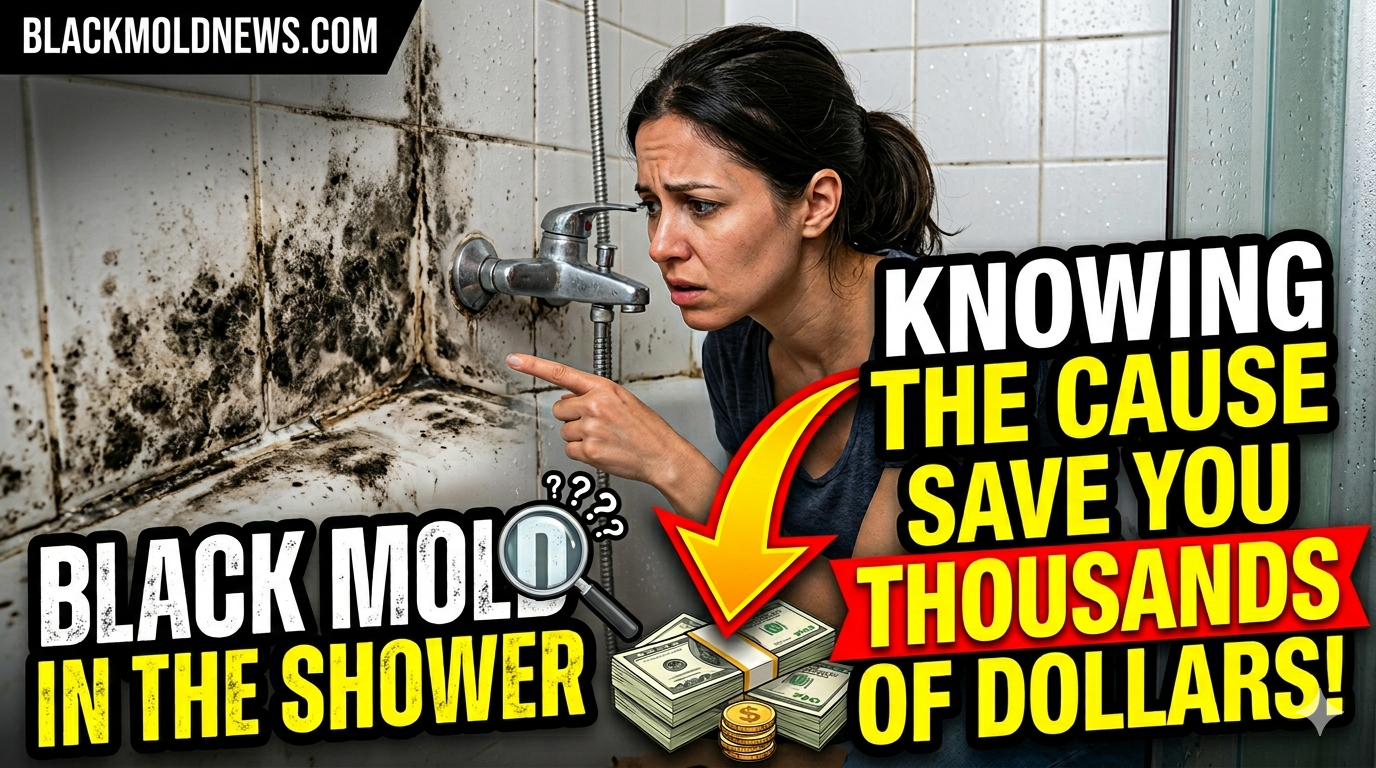
Black mold in a shower is very common — but many people misunderstand what causes it.
Every time someone uses it, the space fills with warm steam, moisture soaks into every porous surface, and organic material — soap scum, shampoo residue, dead skin cells — coats the grout lines.
That combination gives mold all three things it needs to grow: moisture, warmth, and food.
Sometimes it’s simply the result of organic buildup and normal mold growth in a persistently damp environment — manageable with regular cleaning and better ventilation.
But when grout is cracked or missing, when caulk has failed, or when a hidden leak has been slowly moving water behind your tile for months, cleaning the surface will never be enough.
The mold will always come back because the conditions feeding it were never addressed.
In showers, daily exposure to mold spores in a hot, steamy enclosed space concentrates the exposure significantly — you’re breathing in mold at close range, multiple times a week, often without realizing it.
Knowing the cause can save you thousands of dollars and help protect your health.
It is always best to remove the mold as soon as possible once you find the cause to prevent further damage and protect your health.
Understanding the difference between surface mold and a deeper structural problem is the most important step a homeowner can take.
There are three main causes of black mold in the shower, and each requires a different response:
Surface Growth
Mold grows on the tile and grout over time, especially if the shower is not cleaned often or does not dry well between uses. A deep mold cleaning and proper grout mold removal is the best solution.
Cracked Grout or Tiles
Grout can dry out and crack as it gets older. When this happens, water can move behind the tiles and create more mold. The damaged grout usually needs to be removed and replaced.
Water Leak
This is the most serious problem and often the most expensive to fix. A slow leak from a pipe, drain, or failed grout line can let moisture build up inside the wall for months or even years.
This can cause heavy mold growth and may require full mold remediation and replacing the shower.
Grout is the weakest part of a shower because it easily absorbs water. It also traps soap scum and skin cells, which mold uses as food.
Poor bathroom ventilation makes the problem worse by keeping moisture on the grout long after the shower is finished. Warmth and dampness create the perfect place for mold to grow.
If you notice warning signs like a musty smell, loose tiles, stains that keep coming back, or soft walls, the mold may be behind the tile. In these cases, cleaning the surface is usually not enough.
Below is more information to help you understand the three levels of shower mold and what causes them. Once you know the cause, you can choose the right plan to remove the mold safely.
Level 1 — Surface Tile and or Grout Mold (Normal Buildup)
This is the most common type.
Mold gradually colonizes the porous surface of tile and grout over time, especially in showers that aren’t cleaned regularly or don’t dry out properly between uses. It appears as dark gray or black staining along grout lines and can often be removed with cleaning solutions.
This type of mold is annoying but manageable — it hasn’t penetrated deeply and hasn’t reached behind the walls.
If you want to learn how to safely remove mold from shower tiles and grout, please see this link.
Level 2 — Cracked, Missing, or Failing Grout and Caulk
This is where things get more serious.
Grout is not permanent. Over time, it cracks, shrinks, and crumbles, especially at corners and along the shower pan perimeter — areas that flex slightly with temperature and structural movement.
Once those cracks open, water doesn’t just sit on the surface anymore. It seeps behind the tiles.
The cracks allow water to go under the tiles and behind the caulk, creating more mold. The grout needs to be removed and replaced.
Hopefully, you have good waterproofing under the tile, or things can be much worse under that tile.” Failed caulk around the tub edge or shower corners is especially risky — this is the most common entry point for water moving behind the wall.
Hydrogen peroxide or some mold removal spray applied to cracked grout may make the surface look clean temporarily, but it won’t reach the mold that has already begun growing beneath the tile.
The dark stains come back within weeks because the root cause — the cracked, water-permeable grout — was never addressed.
If you want to learn how to safely remove grout mold and repair cracked grout, please see this link.
Level 3 — Hidden Mold Behind the Wall from a Leak
If you have identified warning signs of a deeper moisture problem — recurring mold, loose tiles, persistent odor, soft walls — surface cleaning and regrouting are not enough.
This is the most serious scenario, and it’s more common than most homeowners expect. A slow leak at the supply line, drain connection, or failed grout line can allow moisture to work into the wall cavity silently for months or years.
Once behind the tile, that water soaks into drywall or cement backer board, and if conditions stay wet, mold can take hold.
Continuing to scrub and recaulk while a leak persists simply delays the inevitable and allows the hidden mold colony to grow larger.
Concealed shower leaks have been found to harbor two of the more dangerous mold species associated with mycotoxin production.
If you want to learn how to deal with shower mold caused by a water leak, please see this link.
Warning Signs That Mold Has Gone Deeper Behind the Shower
- If you’re seeing any of the following, the mold may be growing behind the tile — not just on top of it.
- Grout that turns black again within days or weeks of deep cleaning
- Tiles that sound hollow or feel loose when you tap or press them
- Caulk that is pulling away, shrinking, or crumbling at the tub edge or corners
- A persistent musty smell that doesn’t go away even after thorough scrubbing
- Soft, spongy, or warped flooring near the shower base or on the other side of the wall
- Discolored walls or bubbling paint in rooms adjacent to the shower
- Recurring mold that keeps coming back no matter how many times you clean it
The tricky part is that mold behind tile isn’t always visible. Small surface spots are often just the tip of the iceberg — a sign of larger hidden colonies growing where you can’t see them.
When to Call a Mold Professional
Some mold situations are beyond DIY cleaning and regrouting. Call a certified mold remediation company when:
- Mold keeps coming back despite cleaning and grout repair
- You suspect or confirm a leak behind the wall or under the shower pan
- Tiles are loose, the wall feels soft, or you detect a persistent musty odor
- The mold-affected area behind the surface exceeds 10 square feet
- Anyone in the home has chronic respiratory illness, mold sensitivity, or a compromised immune system
Conclusion
Black mold in your shower is rarely just one problem. It can be surface buildup from everyday moisture and poor ventilation — or it can be the visible sign of something far more serious happening inside your walls.
Cracked grout lets water behind the tile. Failed caulk opens a path to the wall cavity. A slow, hidden leak can silently saturate drywall and framing for months before a single visible stain appears.
The solution is always the same: find the moisture, stop it at the source, and fix what it damaged. Cleaning the surface while the underlying problem continues is like mopping the floor while the faucet runs.
For homeowners, the most important habit is simple — inspect your grout and caulk regularly, run your exhaust fan consistently, and take recurring mold seriously rather than writing it off as a cleaning problem.
Caught early, surface shower and grout mold is straightforward to fix.
Left unaddressed, it can become a costly structural repair and a genuine health concern for everyone living in the home.
References
-
U.S. Environmental Protection Agency — What Are the Basic Mold Cleanup Steps?: https://www.epa.gov/mold/what-are-basic-mold-cleanup-steps
-
U.S. Environmental Protection Agency — Mold Cleanup in Your Home: https://www.epa.gov/mold/mold-cleanup-your-home
-
U.S. Environmental Protection Agency — Can Mold Cause Health Problems?: https://www.epa.gov/mold/can-mold-cause-health-problems
-
U.S. Environmental Protection Agency — A Brief Guide to Mold, Moisture and Your Home: https://www.epa.gov/mold/brief-guide-mold-moisture-and-your-home
-
U.S. Centers for Disease Control and Prevention — Mold: https://www.cdc.gov/mold-health/about/index.html

0 Comments