
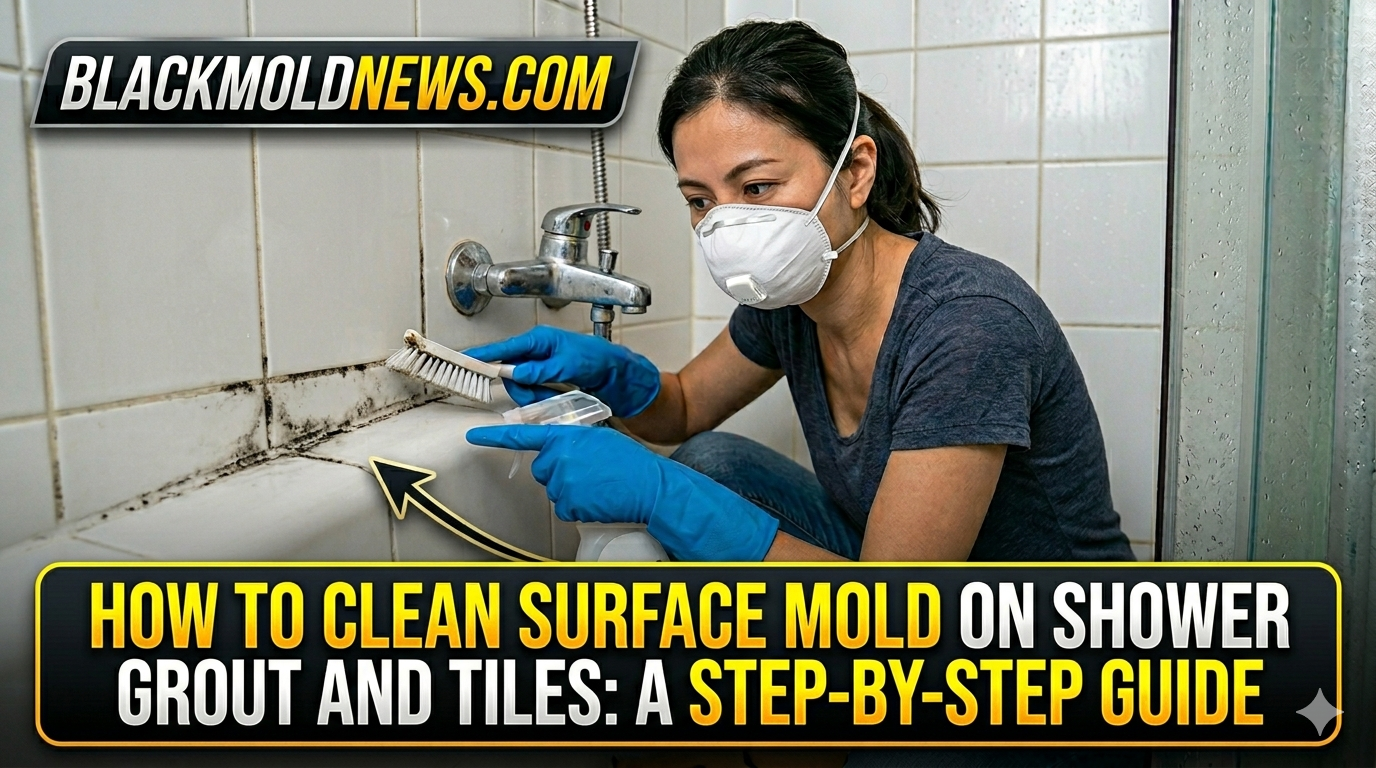
Shower tiles and grout are among the most common sites for indoor mold growth, and for good reason. The combination of standing water, warm temperatures, low airflow, and porous grout creates the perfect breeding ground.
Most homeowners reach for bleach the moment they spot it — and while bleach can help, it is only part of the solution.
Cleaning mold from shower grout takes the right products, the right method, and a plan to stop it from coming back.
This guide will walk you through what causes mold in shower grout, which mold species are most common, how to safely remove it, and — most importantly — how to keep it from returning.
Shower grout is a porous material, especially older cement-based grout. Every time you shower, moisture soaks into tiny pores and crevices that never fully dry out.
Add in warm temperatures, limited ventilation, and organic material like soap scum and dead skin cells, and you have an ideal mold habitat.
Cement-based grout is particularly vulnerable. If it has not been properly sealed, it acts like a sponge — absorbing moisture and holding it long enough for mold spores to take hold and germinate.
Even epoxy grout, which is more moisture-resistant, can still harbor mold on its surface if not cleaned regularly.
Step-by-Step: How to Clean Mold from Shower Grout and Tiles
There are several effective methods for removing surface mold from shower grout. The best approach depends on the severity of the growth and the type of surface. Always wear rubber gloves and open a window or door before cleaning.
Method 1: Diluted Bleach Solution (Most Effective for Disinfection)
This is the CDC- and EPA-recommended approach for non-porous and semi-porous hard surfaces.
-
Mix no more than 1 cup of household laundry bleach per 1 gallon of water
-
Apply the solution to the affected grout and tiles using a nylon-bristle brush
-
Let the solution sit on the surface for 10 minutes
-
Scrub firmly along grout lines
-
Rinse thoroughly with clean water and allow the area to air dry completely
Important safety warning: Never mix bleach with ammonia or any other household cleaner, as this produces toxic fumes.
Method 2: Hydrogen Peroxide Paste (Effective and Less Harsh)
Hydrogen peroxide (H₂O₂) is a powerful oxidizing agent that disrupts the cellular structure of mold and kills it effectively on non-porous surfaces. For porous grout, allow extra dwell time.
-
Mix 1 cup baking soda and ½ cup hydrogen peroxide into a paste
-
Apply the paste directly to moldy grout lines
-
Let it sit for 15 minutes
-
Scrub with a grout brush
-
Rinse clean and dry thoroughly
Method 3: White Vinegar Spray (Preventive Maintenance)
White vinegar is mildly acidic and can help break down early-stage mold growth and surface residue.
-
Pour undiluted white vinegar into a spray bottle
-
Spray directly onto mold-affected grout
-
Allow to sit for at least 15 minutes
-
Scrub and rinse
This method works best for minor, surface-level mold or as a preventive maintenance spray between deep cleanings.
Method 4: Borax Solution (Low-Toxicity, Antifungal)
Borax is a naturally occurring mineral with antifungal properties that does not release harmful fumes.
-
Mix 1 cup of borax per gallon of water
-
Apply to affected grout with a spray bottle or brush
-
Allow to dwell for several hours or overnight
-
Scrub thoroughly and rinse
Unlike bleach, borax leaves behind a residue that can help inhibit future mold growth.
When Cleaning Is Not Enough: Know When to Regrout
Sometimes mold goes deeper than the surface. If mold returns within days of cleaning, if the grout is visibly cracked, crumbling, or discolored beyond scrubbing, or if a musty odor persists after thorough cleaning — cleaning alone will not solve the problem.
Regrouting involves fully removing old grout and applying new material. Experts recommend regrouting every 8–10 years under normal conditions, but shower grout may require replacement sooner due to constant moisture exposure. Signs that it is time to regrout include:
-
Persistent mold that returns quickly after cleaning
-
Visible cracks or missing grout between tiles
-
Grout that has shifted color even after deep cleaning
-
Loose or shifting tiles, which indicate water has penetrated behind the surface
According to tile industry professionals, grout typically lasts 15–20 years with proper care — but showers see far heavier moisture exposure than other tiled areas.
The CDC also cautions that painting over or masking moldy surfaces is an inappropriate remediation approach that leads to further problems.
Protecting Your Grout Long-Term: Sealing and Maintenance
One of the most overlooked steps in mold prevention is grout sealing. Unsealed cement-based grout absorbs moisture like a sponge. Applying a penetrating grout sealer creates a barrier that slows moisture absorption and makes cleaning easier.
Grout should be resealed every 12–24 months depending on shower usage. Additional maintenance practices include:
-
Use pH-neutral cleaners designed specifically for tile and grout during regular cleanings
-
Avoid harsh abrasives that can damage grout texture and make it more porous over time
-
Inspect grout lines every few months for early signs of cracking, discoloration, or mold recurrence
-
Address any caulk failure around the tub surround, corners, and base immediately, as failed caulk lets water penetrate behind tile
When to Call a Professional
Surface mold in a shower that is caught early is a manageable DIY project. However, there are situations where a professional mold inspector or remediation contractor should be involved:
-
Mold growth covers more than 10 square feet
-
There is a persistent musty odor that does not resolve after thorough cleaning
-
You notice mold spreading to adjacent walls or the ceiling
-
Household members are experiencing unexplained respiratory symptoms or other health issues
The EPA recommends consulting a professional if the affected area is large and advises verifying that any contractor follows established remediation guidelines.
Conclusion
Surface mold on shower grout is one of the most common indoor mold problems homeowners face — and one of the most preventable. Understanding why it grows, how to remove it safely, and how to keep it from coming back is the foundation of a healthy bathroom environment.
The methods outlined here — from diluted bleach to hydrogen peroxide paste to borax solutions — are backed by EPA, CDC, and building science guidance. But cleaning is only half the job.
Controlling moisture through ventilation, sealing, and regular maintenance is what breaks the cycle.
Black mold in a shower does not begin as a catastrophe. It begins with a thin dark line in the grout that gets ignored.
The homeowners and renters who stay ahead of it are the ones who understand that mold is a moisture problem first and a cleaning problem second.
Keep the air moving, keep the grout sealed, and address any water problem the moment you see it.
A clean shower is not just about appearance — it is about protecting the air quality inside your home.
-
U.S. Environmental Protection Agency. Mold Course Chapter 1. https://www.epa.gov/mold/mold-course-chapter-1
-
U.S. Environmental Protection Agency. What Are the Basic Mold Cleanup Steps? https://www.epa.gov/mold/what-are-basic-mold-cleanup-steps
-
U.S. Environmental Protection Agency. Ten Things You Should Know About Mold. https://www.epa.gov/mold/ten-things-you-should-know-about-mold
-
U.S. Environmental Protection Agency. A Brief Guide to Mold, Moisture and Your Home. https://www.epa.gov/mold/brief-guide-mold-moisture-and-your-home
-
U.S. Environmental Protection Agency. Mold Cleanup in Your Home. https://www.epa.gov/mold/mold-cleanup-your-home
-
Centers for Disease Control and Prevention. Mold. https://www.cdc.gov/mold-health/about/index.html
-
Centers for Disease Control and Prevention. Mold Clean Up Guidelines and Recommendations. https://www.cdc.gov/mold-health/about/clean-up.html
-
Centers for Disease Control and Prevention – NIOSH. Mold, Testing, and Remediation. https://www.cdc.gov/niosh/mold/testing-remediation/index.html
-
Cleveland Clinic. Mycotoxins: Lifespan, Poisoning & Symptoms. https://my.clevelandclinic.org/health/articles/mycotoxins
-
GAC Environmental. Common Types of Bathroom Mold Explained. https://gacenvironmental.net/common-types-of-bathroom-mold/
-
Sir Grout. Is Grout Mold Dangerous? https://www.sirgrout.com/blog/is-grout-mold-dangerous/
-
Zerorez. Shower Grout Mold: How to Identify & Remove Mold Effectively. https://www.zerorez.com/blog/how-to-clean-shower-mold-from-grout
-
Belk Tile. When to Regrout Tile: Signs It’s Time for a Refresh. https://www.belktile.com/blog/when-to-regrout-tile-signs-its-time-for-a-refresh/
-
Grout Masters. Grout Repair vs. Regrouting. https://www.groutmasters.com/blog/grout-repair-vs-regrouting
-
Grout Shields. The Hidden Dangers of Dirty Grout. https://www.groutshields.com/2025/06/02/the-hidden-dangers-of-dirty-grout-health-risks-you-didnt-know-about/

0 Comments