
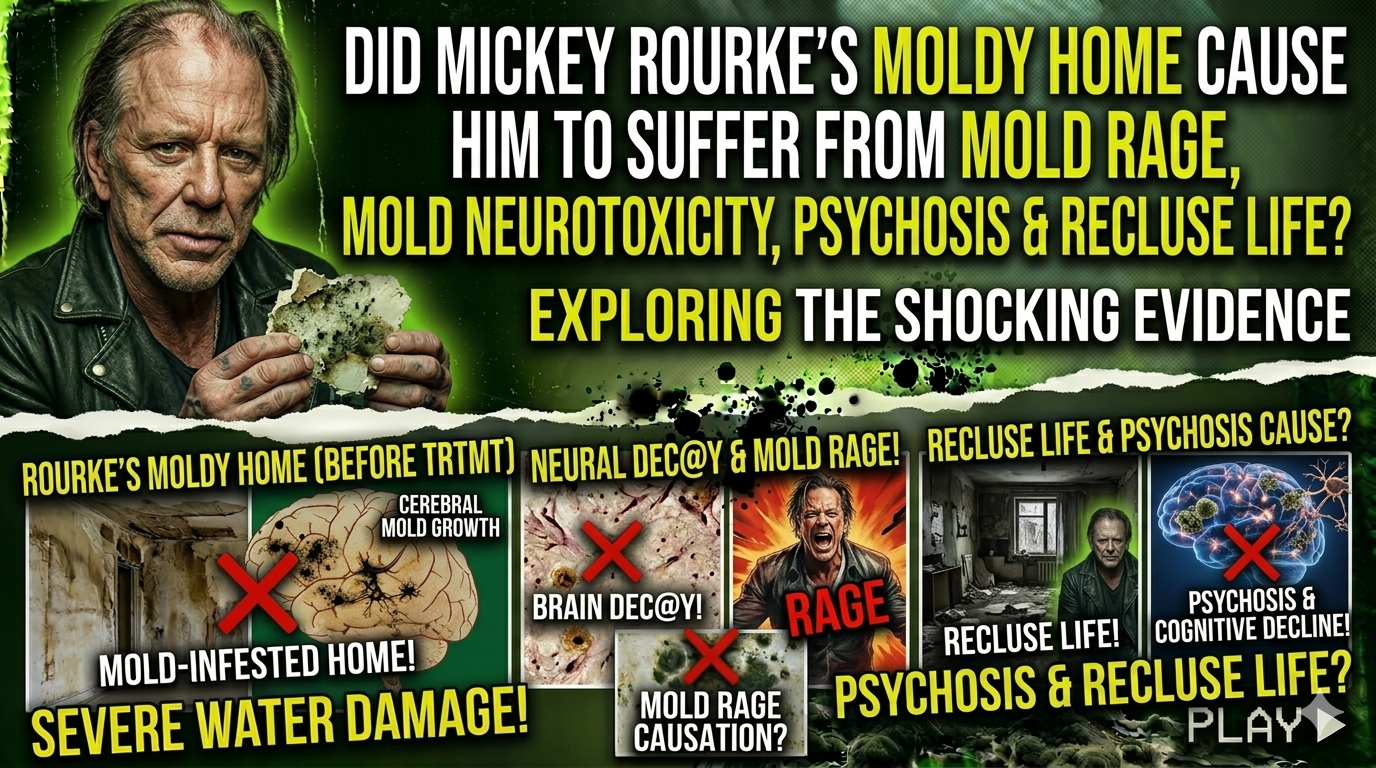
Mickey Rourke was once one of Hollywood’s most magnetic leading men — brooding, talented, and good looking. His 1980s run in films like 9½ Weeks, Angel Heart, and Rumble Fish cemented him as a generational talent.His 2008 comeback in The Wrestler reminded the world of what he was capable of.
But in recent years, the story has grown darker and harder to explain.
Erratic outbursts. Extreme self-isolation. Financial ruin. A frail body.
A mind that seems to misfire in public.
A widely public and sad story of Rourke’s mental health struggles, explosive controversies, physical transformation, financial ruin, and a series of incidents that have left fans and critics asking:
What happened to Mickey Rourke?
In January 2026, photographs of Rourke went viral after he was spotted picking up fast food deliveries outside his Los Angeles home.
He appeared gaunt, frail, and nearly entirely bald — a dramatic departure even from his appearance months earlier. Fans and media noted the sharp hair loss and disheveled state, with TMZ and multiple outlets describing him as “unrecognizable”.

In March, Mickey Rourke’s eviction from his Los Angeles rental has become more than just a legal and financial dispute—it’s now raising serious concerns about the condition of the water damaged and moldy home he had been living in.
Over recent years, Rourke’s behavior has also grown increasingly volatile and socially inappropriate raising concerns over his mental health.
While court records show his recent eviction stemmed from nearly $60,000 in unpaid rent, Rourke and his team tell a very different story.
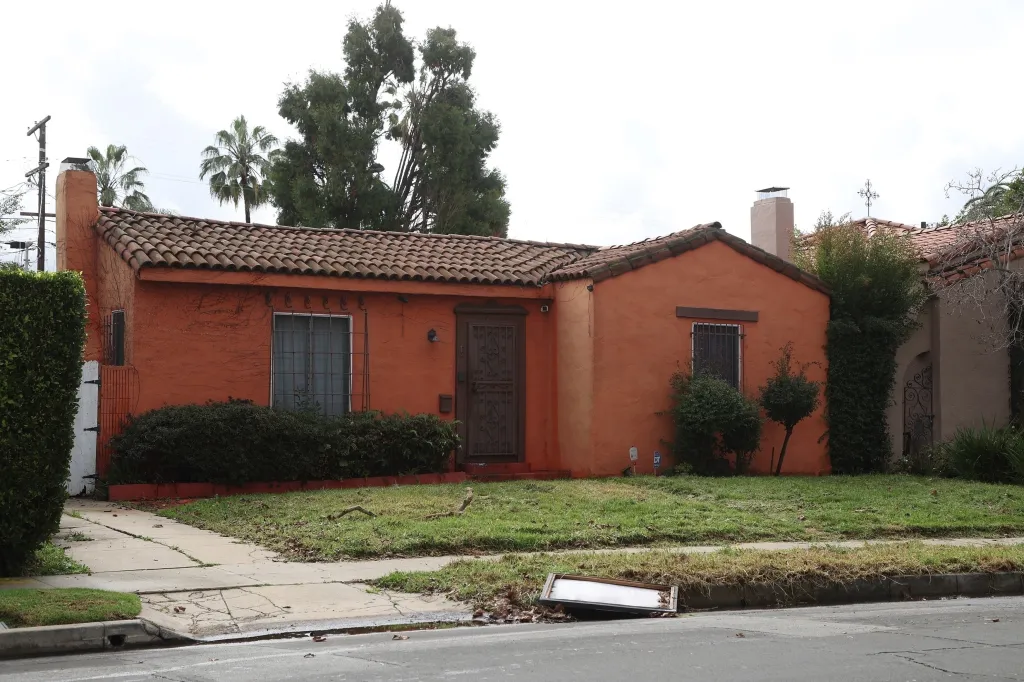
They claim the property had severe water damage, black mold, rodent infestations, and ongoing plumbing failures that made it “unacceptable” and ultimately “uninhabitable.”
According to his manager, the situation had deteriorated so badly that there was no running water, major structural decay, and most of Rourke’s furniture was destroyed by moisture and mold contamination. Despite these claims, the landlord has denied that the home violated housing standards.
The situation came to a head in March 2026 when a default judgment granted the landlord possession of the property after Rourke failed to respond to the complaint.
What followed was a rushed 48-hour evacuation, with his team scrambling to save what they could, relocate him and his dogs, and secure temporary housing.
Much of his belongings had to be abandoned due to mold and water damage, reinforcing claims that the home had become unsafe to live in.
Beyond the eviction and financial stress, this situation raises a deeper concern—whether prolonged exposure to water damage and black mold may have been impacting Rourke’s health and mental well-being.
Several peer reviewed studies have shown that environments with severe mold contamination have been linked to cognitive issues, mood changes, fatigue, and overall decline in health.
Given the reported conditions inside Rourke’s previous home, it’s reasonable to question how much this living environment may have contributed to the decline in his mental health and the health struggles that he’s facing today?
Let me explain…
In April 2025, Rourke entered the British reality show Celebrity Big Brother, where he made homophobic remarks toward housemate JoJo Siwa, made crude sexual jokes that left another contestant in tears, clashed aggressively with housemate Chris Hughes, and was ultimately expelled from the house by ITV producers for “inappropriate language and unacceptable behavior”.
It is clear that Rourke’s behavior looked like someone who had lost the ability to regulate impulse, emotion, and social awareness.
Research has shown that these mental health symptoms will occur or magnify preexisting health conditions for people who have been exposed to water damage and mold toxins like in the case of Mickey Rourke.
A peer-reviewed study published in Brain, Behavior, and Immunity found that repeated inhalation of mold spores — including both toxic and structurally non-toxic spores — caused innate immune activation in the hippocampus, decreased neurogenesis, and produced striking memory deficits, heightened anxiety, and altered pain sensitivity in test subjects.
The hippocampus is the region of the brain most critical to memory formation, emotional regulation, and spatial awareness.
When it becomes inflamed, the results are not subtle.
People lose words. They lose emotional control.
They lose the ability to read social situations accurately.
They forget important financial obligations.
They disengage from the world around them.
Just like Rourke had been doing over the last 10 years.
As if, the mold and toxins were taking over his already fragile mind and old damaged body as it made his poor decision making and impulse control even worse as the exposure continued unabated and his world decayed around him.
This type of behavior has also been witnessed in other cases like Brittany Murphy and Simon Monjack who died within month of each other in their Hollywood Hills home after living in water damage and mold for years.
According to a 2009 study published in NeuroToxicology, human exposure to molds, mycotoxins, and water-damaged buildings can cause neurologic and neuropsychiatric signs that partly mimic or resemble classic neurological disorders — including pain syndromes, movement disorders, delirium, and dementia.
The study’s author noted that “mycotoxins can affect sensitive individuals, and possibly accelerate underlying neurologic or pathologic processes”
This would go along with reports which confirm Mickey Rourke’s health had only got worse over the last decade since he has been living (dying) in that small moldy LA Bungalow.
Possibly the mold in his toxic home was slowly poisoning and killing the already sick and weak actor.
By early 2026, photos and videos circulated showing Rourke looking frail, pale, and skeletal — a shadow of his former self.
He was photographed picking up fast food near a Beverly Hills property that observers described as visibly neglected, with overgrown grass, dead vines, and a door in disrepair. That same property became the center of a legal dispute in which a Los Angeles court entered a default eviction ruling against him in March 2026 after he accumulated approximately $59,100 in unpaid rent.
Rourke disputed the eviction — but his reason for withholding rent is critical: he alleged the home had rodent infestations, plumbing failures, structural issues, and water damage. His manager later confirmed the home had “severe water damage and mold problems”.
One of the most overlooked — and most dangerous — effects of mold toxicity is its capacity to alter behavior in ways that destroy relationships, careers, and reputations.
Mycotoxins disrupt the autonomic nervous system (ANS), which governs the body’s stress response.
When the ANS is destabilized by chronic mold exposure, the sympathetic nervous system can become dominant, creating a body and mind that are essentially stuck in a permanent fight-or-flight state.
The result is a person who overreacts to small provocations, makes poor decisions under pressure, loses impulse control, and is prone to explosive outbursts — exactly the kind of behavior Rourke displayed on Celebrity Big Brother, in denying financial help and in numerous documented incidents over the past decade.
Inflammatory cytokines released in response to mold exposure can directly damage brain cells and disrupt the function of neurotransmitter systems responsible for mood regulation, concentration, and social behavior.
As one clinical analysis noted, “mold toxins not only damage brain tissue but also impair neurogenesis and alter brain chemistry, creating a cycle where emotional and cognitive symptoms worsen over time”.
This matters enormously for someone like Rourke, who was already dealing with a traumatic brain injury history from boxing, admitted childhood abuse, and self-described severe insomnia that left him awake for “one to four days” at a stretch.
Mold toxicity does not operate in isolation. It compounds existing neurological vulnerability.
It does not create problems from nothing — it takes what is already compromised and makes it dramatically worse.
As I suggest may have happened with Mickey Rourke.
His financial chaos is also worth examining through this lens. Severe cognitive impairment from mold toxicity can significantly impair financial decision-making and planning — the kind of impairment that leads a man who worked in movies generating over $2 billion to find himself facing eviction with $59,000 in unpaid rent.
Mickey Rourke’s Self-Isolation Years: A Red Flag
On Celebrity Big Brother, Rourke revealed that he had self-isolated for six years and had not been around people in a meaningful way during that period. He described a profound inner world of fear, shame, and emotional dysregulation rooted in childhood trauma.
That is real and valid. But chronic mold illness is also known to cause withdrawal from social life, profound fatigue, and a kind of emotional flatness or erratic volatility that makes sustaining relationships nearly impossible.
The combination — a man with genuine psychological wounds, sustained neurological damage from boxing, and now potentially years of breathing mycotoxin-laden air inside a water-damaged home — creates a perfect storm for the kind of deterioration that has been on public display.
His behavior on the show was not simply eccentric.
It was disorganized and border line crazy.
The groping, the inappropriate sexual comments, the aggressive confrontation, the inability to read social cues, the brushing his teeth in the kitchen sink — these suggest impaired executive function, the part of the brain controlled largely by the prefrontal cortex and hippocampus — the same brain regions that mold exposure is known to directly target.
The Building Science: Why Water Damage Means Mold
Water damage and mold are not separate issues. They are the same issue in two stages.
When a building sustains moisture intrusion — whether from plumbing leaks, roof damage, or flooding — mold growth can begin within 24 to 48 hours, according to the U.S. Environmental Protection Agency.
Rourke’s property was described as having “plumbing failures” and “structural issues,” sustained moisture exposure is almost certain.
That means Stachybotrys chartarum — commonly known as black mold — and other toxigenic species like Aspergillus and Penicillium would have ideal conditions to grow silently behind walls, under flooring, inside HVAC systems, and in places invisible to the eye.
What makes this especially dangerous is that the occupant does not need to see mold to be harmed by it.
However, in Rourke’s case, he was clearly aware of the water damage and mold.
But did nothing to help himself.
As if the mold was taking over his frail mind and body.
Making his already poor decision making worse as it was he slowly committed suicide in a small moldy LA bungalow as the world laughed.
Black Mold News Conclusion
Mickey Rourke’s story is easy to read as a morality tale about excess, ego, and self-destruction.
And there is truth in those parts of the story.
But the revelation that his Los Angeles home had severe water damage and mold problems — buried quietly in a manager’s statement during an eviction proceeding — deserves far more attention than it received.
For a man already carrying traumatic brain injuries from boxing, the psychological weight of childhood abuse, and the neurological wear of decades of hard living, chronic mold toxicity could be the accelerant that turned a difficult life into a public collapse.
The science is clear that mold exposure worsens existing neurological conditions, disrupts emotional regulation, impairs executive function, and can produce behavior that looks like something else entirely — rage, social breakdown, cognitive decline.
Rourke may or may not be a mold illness patient.
But his situation and home were confirmed to have plumbing issues, water damage and mold.
A home Rourke lived in for over a decade.
10 years of verifiable mental health and physical decline.
Mycotoxins, the toxic chemical compounds produced by mold, are microscopic and airborne.
Every breath taken inside a mold-contaminated building is potentially delivering these toxins directly into the lungs — and from there, into the bloodstream and brain.
Possibly this was what was occurring to Rourke who became more and more a recluse and when he engaged socially, he was known to exhibit “severely toxic and erratic behavior with no impulse control.”
Classic signs of sick man with an inflamed brain and body becoming overloaded with mycotoxins.
References
- Black Mold News – Mickey Rourke Refused to Pay Rent Over Severe Water Damage and Black Mold
- NBC News — Mickey Rourke Eviction Order, March 2026: https://x.com/NBCNews/status/2031782239810273530
-
Harding, C.F., et al. “Mold inhalation causes innate immune activation, neural, cognitive and emotional dysfunction.” Brain, Behavior, and Immunity, 2020. https://pubmed.ncbi.nlm.nih.gov/31751617/
-
Empting, L.D. “Neurologic and neuropsychiatric syndrome features of mold and mycotoxin exposure.” NeuroToxicology, 2009. https://pubmed.ncbi.nlm.nih.gov/19854819/
-
Anyanwu, E.C., et al. “Neurophysiological effects of chronic indoor environmental toxic mold exposure on children.” Scientific World Journal, 2003. https://pubmed.ncbi.nlm.nih.gov/12806113/
-
Hamilton, D. “Understanding Mycotoxin-induced Illness: Part 1.” PubMed, 2022. https://pubmed.ncbi.nlm.nih.gov/36069791/
-
Celebrity Net Worth — Mickey Rourke Financial and Mold Disclosure: https://www.celebritynetworth.com/richest-celebrities/actors/mickey-rourke-net-worth/
-
El País — Mickey Rourke Celebrity Big Brother exit: https://english.elpais.com/people/2025-04-14/mickey-rourkes-latest-downfall
-
MovieWeb — Mickey Rourke Childhood Abuse and Insomnia: https://movieweb.com/mickey-rourke-celebrity-big-brother-childhood-abuse-insomnia/
-
Bluewin — Mickey Rourke Eviction Timeline: https://www.bluewin.ch/en/entertainment/former-sex-symbol-mickey-rourke-evicted-how-did-it-get-this-far-3141337.html
-
Austin MD Clinic — Neurological Effects of Mycotoxins: https://austinmdclinic.com/neurological-effects-mycotoxins-mold-exposure/
-
Chemical Free Gal — Toxic Mold Exposure Can Cause Rage: https://chemicalfreegal.com/2023/01/06/toxic-mold-exposure-causes-rage-neurological-symptoms/
-
GW Center for Integrative Medicine — CIRS and Mold Toxicity: https://gwcim.com/cirs-mold-toxicity-illness/
-
Genesis Performance Chiro — What You Should Know About Mold Illness (CIRS): https://www.genesisperformancechiro.com/blog/2020/4/27/why-you-should-know-about-mold-mycotoxins-and-mold-illness-cirs


0 Comments