
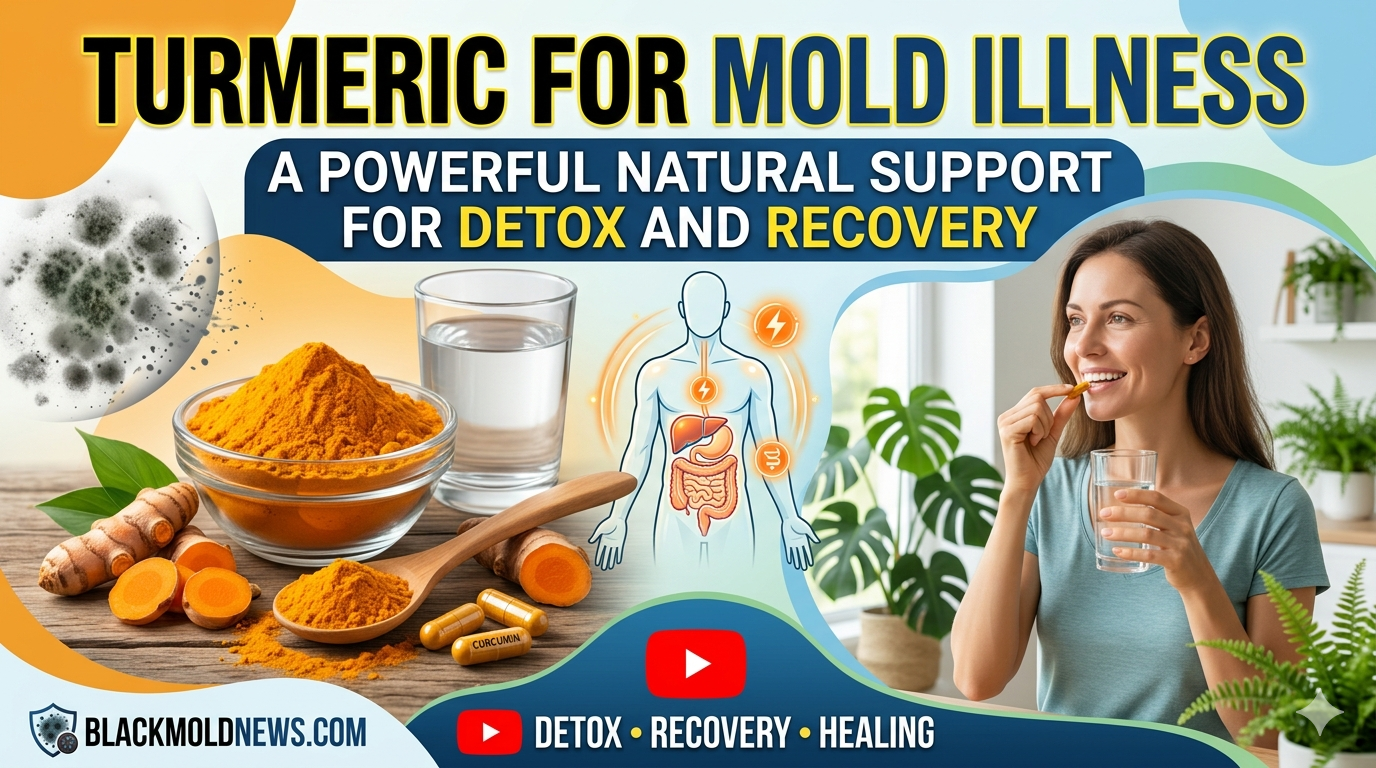
Turmeric — and the powerful compound inside it called curcumin — is emerging in research as one of the most promising natural tools for healing from mold illness, fungal infections and clearing toxic heavy metals like aluminum from the body.
Research published in Phytotherapy Research in 2025 reviewed curcumin’s potential as a detoxifier and concluded that it showed “promising potential in the detoxification of heavy metals, carbon tetrachloride, drugs, alcohol, acrylamide, mycotoxins, nicotine, and plastics.”
This single sentence from a peer-reviewed journal tells you everything you need to know about why mold-illness practitioners and naturopathic doctors are paying close attention to this ancient spice.
Research published in PMC (NIH) notes that “the active component curcumin exhibits countless pharmacological benefits owing to its anti-inflammatory, antimutagenic, antioxidant, antimicrobial, immunoregulatory, chemopreventive, and chemotherapeutic properties”.
For mold illness sufferers, several of those properties are especially relevant.
According to functional medicine physician Dr. Elena Klimenko, “Chronic inflammation is a hallmark of mold illness,” and that inflammation doesn’t stop just because someone leaves a contaminated building.
The mycotoxins continue to create damage while they remain in the body.
One of the most important mechanisms curcumin activates against mold illness is its ability to block the NF-κB pathway — often called the body’s “master inflammation switch.”
When mycotoxins enter the body, they activate NF-κB, which instructs your DNA to pump out inflammatory cytokines like IL-6, TNF-α, and IL-1β.
Curcumin works by inhibiting the IKKβ enzyme needed to activate NF-κB. When IKKβ is blocked, NF-κB stays trapped in the cell’s cytoplasm and cannot enter the nucleus to trigger inflammation.
Research published by the Frontiers in Molecular Neuroscience journal confirmed curcumin has a “broad cytokine-suppressive anti-inflammatory action” through this exact mechanism.
Put simply, curcumin helps turn off the fire alarm that toxic mold keeps triggering.
Curcumin and the Mold-Damaged Brain
Brain fog is one of the most debilitating symptoms of mold illness.
Mycotoxins cross the blood-brain barrier and activate microglia — the brain’s immune cells — driving neuroinflammation that disrupts memory, focus, and mood.
Curcumin can also cross the blood-brain barrier, making it unique among anti-inflammatory compounds. A landmark UCLA study found that people taking curcumin improved memory test scores by 28 percent over 18 months and also experienced improvements in mood.
Curcumin reduces microglial hyperactivation — the brain immune response that mycotoxins trigger — and helps protect the neuronal pathways responsible for memory and concentration.
Research published in PMC on brain diseases noted that curcumin “is indeed able of inhibiting NF-kB mediated transcription, inflammatory cytokines, inducible iNOS and Cox-2 resulting in its antioxidant and anti-inflammatory” effects in the brain. For mold illness patients struggling to think clearly, this mechanism matters directly.
Curcumin’s Fight Against Mycotoxins
Research on curcumin’s ability to counteract mycotoxins is substantial and growing.
Mycotoxins cause massive oxidative stress — an imbalance between harmful free radicals and the body’s ability to neutralize them. This damages cells in the liver, kidneys, and brain.
Curcumin directly counters this by activating the Nrf2 pathway, which is responsible for producing the body’s own antioxidant enzymes like glutathione and superoxide dismutase.
A PubMed study confirmed that curcumin protects against oxidative damage by simultaneously elevating Nrf2 and downregulating NF-κB.
These two actions together make curcumin a double-edged weapon against the damage mycotoxins cause.
A 2022 NIH/PMC review specifically examined curcumin’s role against aflatoxin B1 and found that curcumin worked through the body’s Phase I and Phase II detoxification pathways in the liver — the same pathways responsible for processing and eliminating toxic substances from the body.
A 2023 study published in PMC found that turmeric powder counteracted the negative effects of AFB1 by increasing hepatic gene expression of key antioxidant enzymes, including CAT (catalase) and SOD2 (superoxide dismutase).
In plain terms: curcumin helped the liver turn up its own natural detox defenses when under assault from mold toxins.
Curcumin also supports the body’s detox transport proteins.
Research showed that turmeric enhanced the expression of drug transporter proteins (ABCG2 and ABCC2) in the liver and intestine, which effectively prevented mycotoxin absorption from the gut while accelerating its excretion from the body.
In birds co-treated with turmeric powder and AFB1, the mycotoxin became undetectable in treated groups — a striking finding.
Regarding ochratoxin A, the same compound that commonly contaminates water-damaged homes, curcumin has been shown to “significantly reduce OTA-induced oxidative damage and lipid metabolic disorders by enhancing liver catalase activity and remodeling the intestinal microenvironment.”
Gut health is critically important here, as mold-ill patients frequently suffer from intestinal permeability — often called “leaky gut” — which allows mycotoxins to pass repeatedly back into the bloodstream.
The Research on Curcumin and Specific Mycotoxins
The science on curcumin and mycotoxins is specific, not just theoretical. Here is what peer-reviewed research shows for the most common toxic mold species and their byproducts.
Aflatoxin B1 (AFB1) — From Aspergillus Mold
Aflatoxin B1, produced by Aspergillus flavus and Aspergillus parasiticus, is one of the most potent naturally occurring carcinogens known to science. It causes liver damage, DNA mutations, and immune suppression.
A review published in PMC (NIH) found that “animal experimental or in vitro studies reported that curcumin supplementation could effectively reduce AFB1-induced liver damage, renal dysfunction”.
In mouse studies, curcumin reduced the accumulation of AFB1-DNA adducts in the liver and alleviated hepatotoxicity by “inhibiting AFB1-induced oxidative stress and potentiating GST-mediated Phase II detoxification”.
Curcumin also blocked the NLRP3 inflammasome — a key driver of the inflammatory cascade triggered by AFB1.
A separate 2021 study published in PMC confirmed that “curcumin supplementation ameliorated AFB1-induced acute liver lesion, detoxification, oxidative stress, and inflammation”.
Researchers at Nature also confirmed through molecular docking studies that curcumin physically forms stable bonds with aflatoxins, which may neutralize the toxins before they can cause cellular damage.
Ochratoxin A (OTA) — From Aspergillus and Penicillium
Ochratoxin A (OTA) is found in water-damaged buildings and contaminated food. It is strongly nephrotoxic — meaning it destroys kidney tissue — and also damages the liver and immune system.
A 2021 study in PMC demonstrated that curcumin treatment “significantly attenuated oxidative stress and lipid peroxidation” in OTA-exposed rats and reduced liver damage including “multifocal lymphoplasmacellular hepatitis, periportal fibrosis, and necrosis”.
The study concluded that curcumin “could overcome oxidative stress and decrease the biosynthesis of mycotoxins in food sources, while protecting human and animal health”.
A 2023 study in ScienceDirect confirmed that curcumin reduced OTA-induced liver inflammation by modulating intestinal microbiota and inhibiting the TLR4 signaling pathway, which drove elevated IL-6 levels.
Google Scholar records also show research confirming that curcumin “mitigates ochratoxin A-induced oxidative stress and alters gene expression” in liver and kidney tissue.
Helps Detox From Heavy Metal Toxicity
It is not a coincidence that people suffering from mold illness often also show signs of heavy metal toxicity.
Mold illness compromises the liver and the glutathione system — the body’s master antioxidant and primary route for clearing both toxins and metals.
When the liver is overwhelmed by mycotoxins, its capacity to process and excrete heavy metals is reduced, causing metals like aluminum to build up in tissues and the brain.
This creates a vicious cycle: mold toxins impair metal detoxification, and metals in turn increase oxidative stress, which makes the body more vulnerable to mycotoxin damage.
Curcumin may help break this cycle by doing multiple jobs at once — calming inflammation, restoring glutathione levels, chelating metals, and supporting the liver’s Phase II detox enzymes simultaneously.
What Mold Professionals and Integrative Doctors Say
Practitioners who treat mold illness have been increasingly incorporating curcumin into their clinical protocols.
A mold detox support protocol developed by practitioner Dr. Bruce Hoffman recommends turmeric curcumin at 2,000 mg, noting that it “supports detoxification and may help address mold exposure through its anti-inflammatory and antioxidant properties,” and that it “is believed to enhance liver function and assist Phase 2 glucuronidation, which processes toxins.”
Clinicians treating mold-illness patients often emphasize that curcumin works best as part of a broader protocol that includes binders like activated charcoal, liver support from milk thistle, and probiotics to restore gut health.
Curcumin alone is not a cure for mold illness, but it addresses several of the core biochemical breakdowns that mold exposure causes: oxidative stress, chronic inflammation, liver strain, gut inflammation, and heavy metal accumulation.
The Curcumin Bioavailability Problem — And How to Solve It
Here is the catch: curcumin on its own is poorly absorbed by the human body.
It dissolves poorly in water, passes quickly through the digestive tract, and gets rapidly metabolized before it can reach the bloodstream in meaningful amounts.
The good news is that this problem has a simple, well-researched solution.
Black pepper contains an alkaloid called piperine, and when consumed alongside curcumin, piperine dramatically improves absorption.
Research published in Planta Medica found that piperine increases curcumin bioavailability by up to 2,000% by inhibiting the liver enzymes that normally break curcumin down too quickly.
A clinical human study published in PMC/NIH found that curcumin consumed with black pepper extended curcumin’s half-life from 2.2 hours to 4.5 hours and dramatically increased the total amount of curcumin absorbed over 24 hours.
Tips for maximizing curcumin absorption:
- Always combine turmeric with a small amount of black pepper (even a pinch is helpful)
- Take curcumin supplements with a fatty meal, as curcumin is fat-soluble
- Consider liposomal or phospholipid-bound curcumin formulations for maximum bioavailability
- Choose high-curcumin turmeric varieties — some contain 7–9% curcumin versus the typical 2–5%
Conclusion
The research is clear: curcumin, the active compound in turmeric, offers meaningful biological support for people recovering from toxic mold exposure.
It blocks inflammatory pathways mycotoxins activate, protects the liver and kidneys from oxidative damage, neutralizes specific mycotoxins including aflatoxin B1 and ochratoxin A, and crosses the blood-brain barrier to address the neuroinflammation behind brain fog.
Turmeric and its active compound curcumin represent a well-researched, affordable, and accessible tool for people recovering from toxic mold exposure and heavy metal burden.
The science shows that curcumin works on multiple fronts: it directly counteracts mycotoxin damage in the liver and gut, it chelates heavy metals like aluminum and helps the body excrete them, and it restores the antioxidant and anti-inflammatory balance that mold exposure destroys.
Used correctly, with black pepper to boost absorption and as part of a comprehensive care plan, turmeric may help the body finally begin to clear the toxic burden that mold leaves behind.
Combined with proper source removal, binders, gut restoration, and medical supervision, curcumin’s ancient healing potential is being confirmed by modern science — one study at a time.
References
-
Phytotherapy Research (2025). “Curcumin: A Potential Detoxifier Against Chemical and Natural Toxicants.” PubMed. https://pubmed.ncbi.nlm.nih.gov/39853860/
-
PMC/NIH (2023). “Turmeric Powder Counteracts Oxidative Stress and Reduces AFB1 Toxicity.” https://pmc.ncbi.nlm.nih.gov/articles/PMC10747922/
-
PMC/NIH (2022). “Aflatoxin B1 Toxicity and Protective Effects of Curcumin.” https://pmc.ncbi.nlm.nih.gov/articles/PMC9598162/
-
PMC/NIH (2023). “Ochratoxin A: Overview of Prevention, Removal, and Detoxification.” https://pmc.ncbi.nlm.nih.gov/articles/PMC10534725/
-
PMC/NIH (2023). “A Review of the Role of Curcumin in Metal Induced Toxicity.” https://pmc.ncbi.nlm.nih.gov/articles/PMC9952547/
-
PubMed (2011). “Curcumin attenuates aluminum-induced oxidative stress and mitochondrial dysfunction.” https://pubmed.ncbi.nlm.nih.gov/21656326/
-
PubMed (2009). “Curcumin attenuates aluminium-induced functional neurotoxicity in rats.” https://pubmed.ncbi.nlm.nih.gov/19376155/
-
PubMed (2017). “Efficacy of Curcumin in Ameliorating Aluminum-Induced Neurotoxicity.” https://pubmed.ncbi.nlm.nih.gov/30055551/
-
PubMed (2025). “Curcumin mitigates memory deficits induced by aluminum oxide nanoparticles.” https://pubmed.ncbi.nlm.nih.gov/40293979/
-
PubMed (March 2026). “Protective role of curcumin and selenium nanoparticles against AlCl3-induced hepatorenal toxicity.” https://pubmed.ncbi.nlm.nih.gov/40742469/
-
PMC/NIH (2023). “Effect of pepper on curcumin bioavailability.” https://pmc.ncbi.nlm.nih.gov/articles/PMC10724617/
-
Living Roots USA (2026). “The Science Behind Curcumin Absorption: A Physician’s Perspective.” https://www.livingrootsusa.com/blogs/blog/the-science-behind-curcumin-absorption-a-physicians-perspective
-
PMC/NIH (2023). “The Differential Antagonistic Ability of Curcumin against Cytotoxicity Induced by Heavy Metals.” https://pmc.ncbi.nlm.nih.gov/articles/PMC10053940/
-
SuppCo (2025). “Mold Detox Support Supplement Protocol — Bruce Hoffman.” https://supp.co/protocols/bruce-hoffman-mold-detox-support
-
Austin Holistic Dr. (2024). “How to Detox Your Body from Mold Exposure Using Holistic Methods.” https://www.austinholisticdr.com/blog/how-to-detox-your-body-from-mold-exposure
-
U.S. Environmental Protection Agency — Mold Resources. https://www.epa.gov

0 Comments